Knowing, Suffering, And Life Under Competitive Authoritarianism
We love to pretend we know for certain what is good and what is bad

The narratives that wear grooves in our brains are not real.
They’re ephemeral at best. At worst they're collections of stories pulled from nothingness cobbled together and projected into our future, where they become real to us, the storyteller who never sleeps and loves to be anxious about everything all the time.
All of these projections are created with the underlying assumption that we cannot be wrong, that all of the narratives we weave together – the ones that make us nervous and depressed and angry and sad – are correct. They are predictions made from nothing, and they make us believe we know when something is good or bad.
We don’t, of course. We can't. But that doesn’t stop us from telling ourselves and others that we know these things for certain.
I very much appreciate folks who support Bad Faith Times. Click here to upgrade to BFT supporter status and gain access to the lovely BFT discord community. You can also leave a tip if that's your thing.
We can’t know what is good and what is bad in the long run: It’s an idea that’s animated the way I (try to) see life under competitive authoritarianism. The constitutional rule of law is effectively dead for now, waiting to be revived by those with at least fleeting interest in a functional society. Nothing makes sense anymore culturally or politically. It’s a wildly disorienting time to be alive, and if you’re not careful, you’ll assume everything that comes to pass in this competitive authoritarian landscape is knowable, when really, we’ve never lived in a less knowable time.
This lack of certainty, of not knowing, is painful for people – some more than others. It can manifest into physical discomfort. We like to know because we see the act of knowing as a path to success, to getting and keeping what we want.
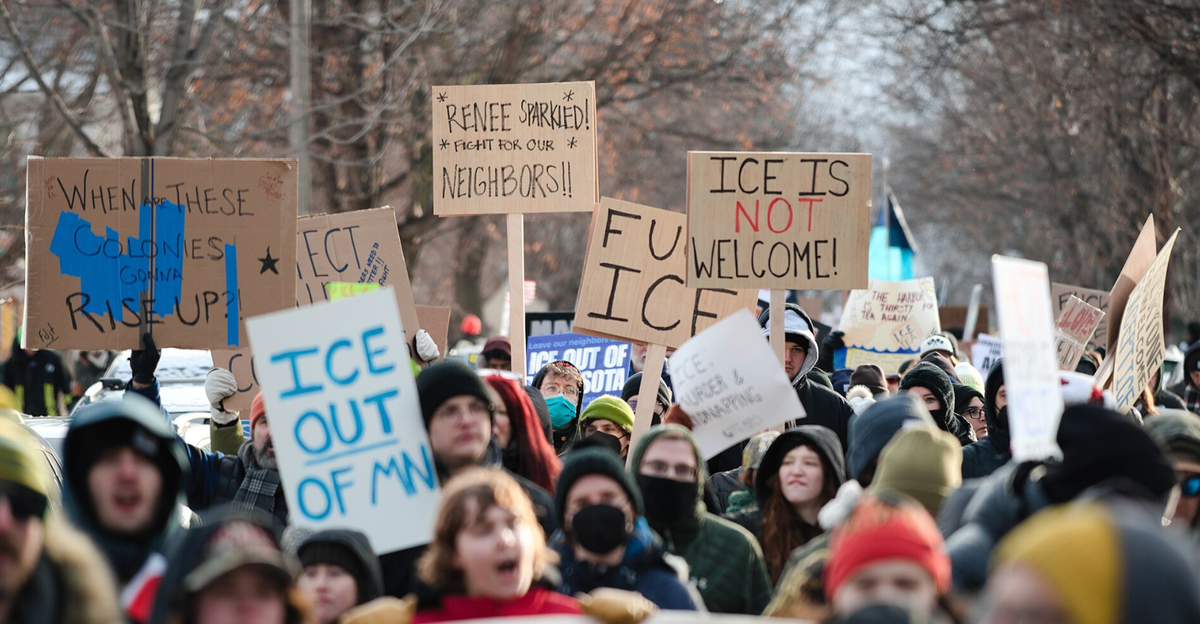
This isn’t to dismiss the pain and turmoil people endure when power is weilded against the interests of the powerless and vulnerable. The siege of Minnesota by the president’s paramilitary forces last winter produced some of the most harrowing images and news accounts of my lifetime as a citizen of the American empire: Our insidious militarism had come home to roost. Americans murdered in the streets before cameras. The murderers protected by the government. Masked men working for the president dragging fear-stricken people from their families and throwing them into unmarked vans. The enemies of freedom getting off on the sound of chains wrapped around those they see as less than human.
 Denny Carter
The invasion and occupation of Minnesota was traumatic in every way. It also activated thousands and thousands of decent people who dedicated their lives to protecting members of their community being hunted by the president’s genocidal paramilitary force. The regime’s siege created untold numbers of activists who had seen government power at its absolute worst and stood up and said no, you can’t do this to my neighbor. For this Alex Pretti was murdered.
The images flowing from the invasion of Minnesota – the never-ending fascist content creation – showed the rest of the country what it had wrought when it empowered a criminal insurrectionist to lead the country in 2024. His pain was our pain now, and he would spread that pain as far as it would go until someone – or many someones – stood up and said no, you can’t do this to my neighbor. Normies everywhere were radicalized. This, I think, was a good development.
ICE’s terror campaign against migrants and American citizens alike has created thriving, potent cells of activism throughout the country over these past two years. A lot of pain and death and ruined lives have led to a new and urgent sense of how far astray we’ve gone in the twilight of empire. That’s what I mean by being certain we know what is good and what is bad in the long run. The ICE invasions of American cities – which continue today in quieter ways – can’t be described as Only Bad. There has been good: Tighter-knit communities dedicated to supporting and protecting the vulnerable and underrepresented, recognition of the stranger’s humanity and basic goodness, citizens who take their roles more seriously in local political matters, recognition of and opposition to vast and dangerous government overreach, the critical importance of the fucking rule of fucking law, the (delayed) understanding that one of the country’s two major political parties is incompatible with representative democracy.
My home county government sends text and email alerts when members of the president’s paramilitary are seen skulking around local neighborhoods, guns drawn, intentions bad. Groups of volunteers are dispatched to these areas within minutes of these alerts, warning potential targets of the masked paramilitary to seek safety. This is a (good) part of life under competitive authoritarianism, and it would not have happened if the (bad) ICE invasions had not created a burgeoning sense of self reliance and community protection.
The good part can last a lifetime. The bad part can be ended if the people we empower want it to end.
The Overused Suffering Button
Folks did not particularly enjoy my February 2025 blog on the concept of suffering as imaginary and self-inflicted. I wrote about the Buddhist teachings around suffering: That it stems from a certain kind of desire, and that no one can actually force you to suffer. This was a hard lesson for me – as it is for most westerners – because we view ourselves as the center of all things and identify so strongly with our own suffering that we often can't see beyond it. We are it and it is us. We are the victims of a mercilessly impersonal universe that victimizes us all day every day. We have no choice but to suffer because the world has reached inside us and pressed the Suffering Button, which used to be red before the paint wore off from excessive button pushing. Now it's a weird grey color. It's ugly.
 Denny Carter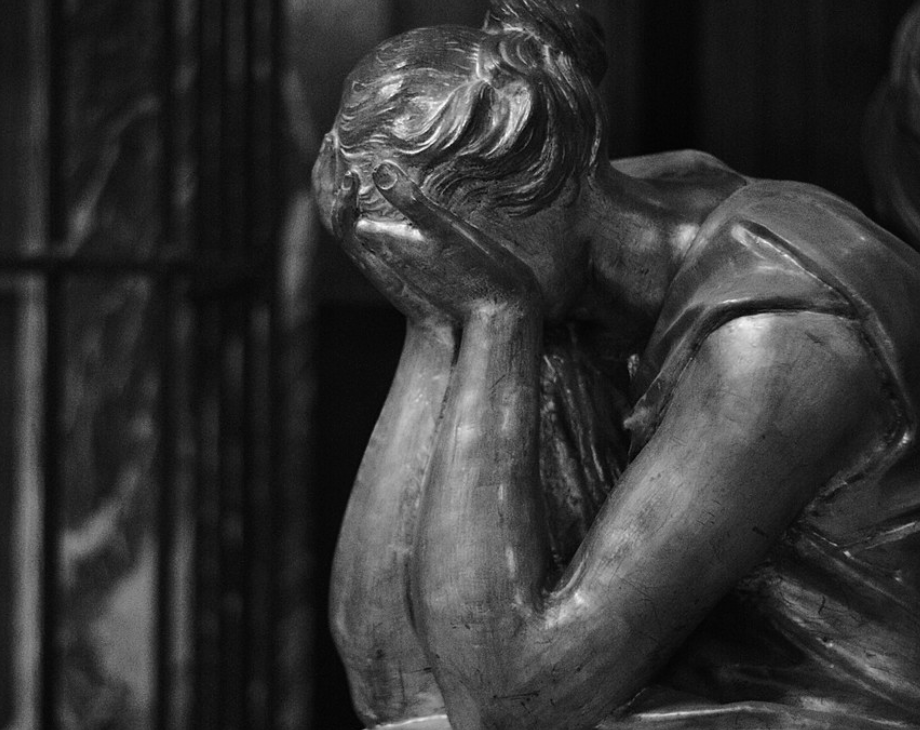
Some BFT readers and folks on Bluesky lashed out after I published the Suffering Machine blog. Someone told me his parents had died of cancer within a year of each other. How, he said, could he not suffer? And why would I suggest he shouldn't suffer? He had been left without a choice in the matter. The death of his parents had pushed the suffering button a thousand times. I didn’t push back because I don’t relish social media conflict – or any conflict at all – and I don’t know this person. It seemed like an exchange that would best be had face-to-face, not one Bluesky reply at a time.
My question, I guess, would be what exactly forces one to suffer if one has lost a loved one to illness – in this case, cancer. Is it the cancer cells that make you suffer? The deceased loved one? The politician who has held back cancer research dollars? Is it God, gleefully taking away someone you have never been without? Who or what, exactly, is pushing the Suffering Button? The answer, as terribly uncomfortable as it may be, is us. We push the Suffering Button. And that’s OK; you should feel your feelings, as they say on Instagram.
I wrote in that 2025 blog that Elon Musk, using his ocean of money to advance fascism both at home and abroad, could not force people to suffer. Even the savage funding cuts Musk and his DOGE footsoldiers made to international aid did not force anyone to suffer in the Buddhist tradition. Those monstrous cuts caused famine and disease and cut short the lives of desperate people in the poorest parts of the world, but Musk didn’t force anyone to suffer. He doesn’t have that power, thankfully. It's one power he can't purchase.
Someone online sort of agreed with the Suffering Machine blog. They said Musk had not made them suffer personally. He had, however, forced federal workers to suffer during his 90-day coup of the U.S. government. Those people were suffering and it was all Musk’s fault, they said. My response was that Musk had not, in fact, made any government worker suffer. He might have taken away their jobs and thrown their professional lives into chaos. He did not force them to endure one minute of suffering.
I thought back to June 2020, when I was laid off from my job as a news editor out of absolutely nowhere. I was shocked and sad and more than a little anxious about where I would get money to support my wife and my kids, 8 and 4 at the time. My boss's boss and the kind HR lady told who axed me over Skype that morning told me about next steps and my final paycheck and how to send my laptop back to the company. At no point did they say I had to endure a certain amount of suffering, or any at all. The suffering was my job: Creating intricate stories of a not-so-distant future in which I'm asking my parents for money to pay the mortgage or applying for government assistance or selling my car or taking a job I hate just to get some money flowing.
Suffering is a choice. It’s a most empowering idea.
The idea of suffering as a personal choice and the idea that we do not and cannot know if something is ultimately good or bad, I think, are intertwined (the former, I think, is often intentionally misunderstood as a way to victim-blame, which it is not). In many cases I think it’s the storytelling in our head and the sureness of the self-created narratives and projections that pave the road to immense and prolonged suffering. If you truly believe the story you’ve created from thoughts floating here and there, you can quite easily find a reason to experience suffering. There’s always a reason to press your own Suffering Button.
 Denny Carter
My button, maybe like yours, is worn thin, even though I know it’s there and I know no one can press it except for me. And yet I sometimes project myself into a horrible future for me and my children and their children and I sit there and fret and worry and rage and suffer. I read a story about one of our tech oligarchs saying the time for democracy has come and gone and I suffer. I hear a news story about government leaders cheerfully allowing their golf buddies to poison the environment without consequence and I suffer. I see media pundits defend young men accused of heinous campus sex crimes and I suffer. I see these pundits cheer on the perpetrators of sexual violence and my suffering is ratcheted up.
Because in my mind I pretend to know none of these developments will ever lead to anything good and decent (this was the impetus behind After The Great Redo). The tech industry’s relentless attacks on self governance, I seem to know, will never lead to laws and reforms that make society more resilient against its wealthiest members. I’m certain the environment will collapse, that a movement to preserve the climate will never succeed here or elsewhere. I have no doubt that the legal system will fail the college student who was assaulted, or hold accountable anyone who has hurt and abused others.
None of this is knowable. None of it is absolutely true. That usually doesn’t stop me from believing it is.
Follow Denny Carter on Bluesky at @dennycarter.bsky.social.