A Working Class Hero Isn't Something To Be
Graham Platner's disgraced campaign illustrated the problems of class dealignment


Lost in the shame and fear and loathing and gnashing of teeth that came with Graham Platner's exit from race for Maine's U.S. Senate seat was the total failure of the burly, tatted-up man's cosplaying of a regular working-class oysterman.
Platner, I'm sure, knows something about oysters and extracting them from the sea. Probably he knows a good bit about the economic woes of oyster getters and others in Maine who trade their labor for a little bit of cash every week or two. Platner, before he begrudgingly bowed out of the Senate race against forty-seven term incumbent Susan Collins following a sexual assault allegation (that he denies), talked a good game about working class struggle.
If you enjoy Bad Faith Times blog posts and videos and podcasts, considering supporting BFT, a reader-backed publication.
The man has done his reading. He's familiar with the working class struggle; even his haters should be able to concede this much. Platner was not, however, a working class guy. The following is not a knock on Platner, but the plain truth: He comes from a wealthy and privileged background, and has likely never wanted for anything.
That, I think, should be OK. It's not Planter's fault he was born into wealth. A concerned American citizen should be able to run for office as a populist, working-class candidate without having lived a hard life of perpetual economic precarity. There's no reason a man like Platner has to dress down and change his vocabulary and lie about the way he lives to promote a politics that beats back the monstrous oligarch class and offers a little dignity to people who trade their work for food and a roof and the occasional fancy cup of coffee or trip to the beach.
There's no reason to cosplay a working class American. And yet, that's exactly what Platner did in his 18 months of running for a Senate seat that should be an easy win for Democrats in this unprecedented political environment.
Lawrence O’Donnell dismantles the myth of Graham Platner. And warning signs were there all along. Information was publicly available, but ignored. Maybe the U.S. Senate shouldn’t be someone’s first political job. No public office. No real vetting. Hype isn’t a substitute for scrutiny. 🧵
— Christopher Webb (@cwebbonline.com) July 8, 2026 at 10:23 AM
[image or embed]
Franklin Delano Roosevelt, after all, looked like the goddamn Monopoly man and was fiercely in favor of pro-worker policies – so much so that he threatened to fuck up the Supreme Court if they didn't play ball with his New Deal agenda.
The worst part – maybe the funniest part – of Platner playacting as a struggling working-class Mainer who couldn't afford a shave and a decent haircut is that it did not work.
Collins, the living embodiment of the calcified, corrupted Washington establishment that is so thoroughly loathed by American voters, was destroying Platner 58-37 among self-identified working class voters before Platner dropped out of the race. Platner, meanwhile, was doing quite well with middle and high income voters and – before the most recent sexual assault allegation – women voters. Maybe that's because, as astute political observers and writers have said for months, Platner is an appealing, non-threatening avatar for what a working class man looks like to folks with a little money.
 Denny Carter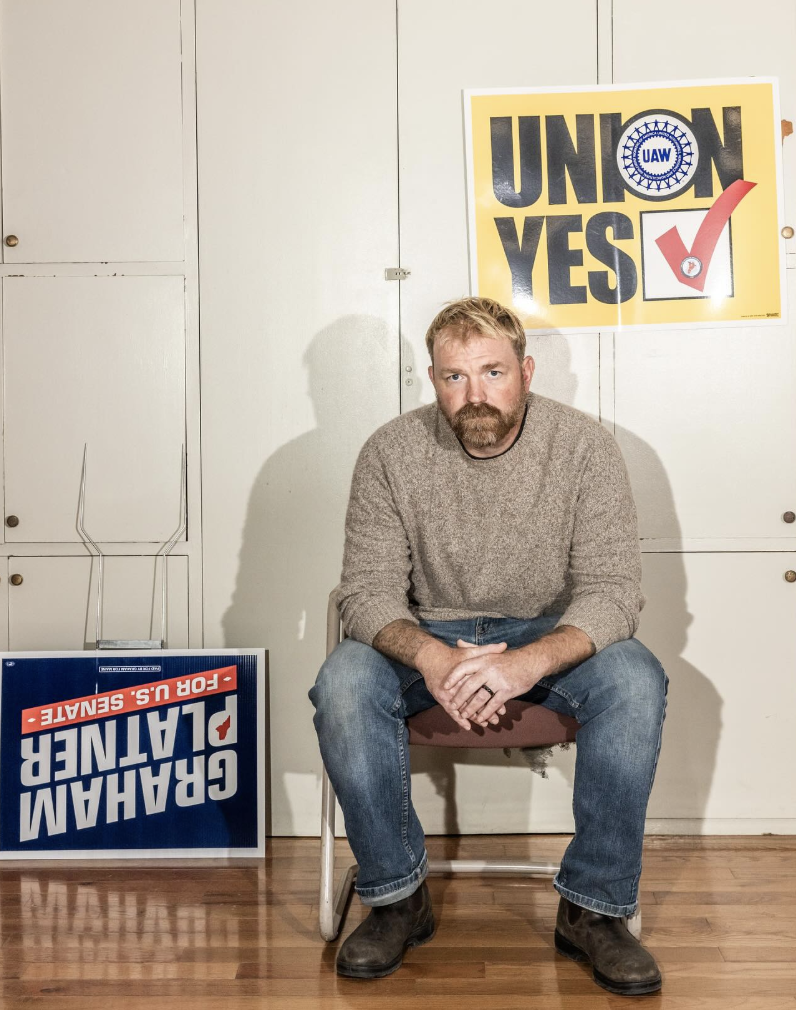
Platner's working class cosplay was based on the loose idea of a working class white fella as seen in the mind of a liberal-leaning podcaster or a quant-brained campaign strategist who makes $800,000 a year. Platner's whole shtick failed spectacularly.
All the effort Platner and his handlers put into presenting him as a member of the state's working class was wasted energy, per recent NYT polling data: 93 percent of voters who backed Platner said they were doing so based on "where he stands on the issues." Four percent said they would support Platner based on "who he is as a person."
Before he bailed on the Senate race, Platner was doing worse with working class Mainers than Kamala Harris, no one's idea of a left-wing populist, had done in 2024. Most 2026 Democratic candidates in Maine were outpacing Platner among working class folks. In a state where only 30 percent of the voting public supports the tyrannical Republican president, a normie-coded Democrat would have sufficed against the unpopular Collins (ever the hope-pilled shitlib, I think there's still a decent shot Collins is defeated this fall).
Maybe working class Mainers saw through the beat-up flannel shirts and the ill-fitting pants and the unruly beard and the Yosemite Sam mustache and knew in their bones that Platner was not the Real Thing, that he was doing his best to be one of them but was certainly not one of them. Or maybe, as one Mainer explained to me on Bluesky this week, working-class rural Mainers with unfailingly right-wing politics were never going to budge and cast a vote for a Democrat, a messenger of Satan himself. Maybe there's no path to Democratic candidates peeling off white working class backing from the Republicans they have supported enthusiastically and with no regret.
That would be a tough electoral reality for Democrats since, according to Pew Research, nearly 30 percent of the voting population is a white person without a college degree.
Class Dealignment Strikes Again
This is the theory behind what's known as class dealignment, a disconcerting trend over the past couple decades driven primarily by negative polarization in which poorer voters without a college degree gravitate toward the Republican Party while richer folks with a college degree cuddle up to the Democratic Party.
This in turn gives Republicans cover in their utterly ludicrous attempt to rebrand as a populist workers party. It also opens up the Democrats to charges of elitism.
Class dealignment is, in short, a massive problem for the American left and a boon for the country’s fascist movement.
 Denny Carter
It’s why JD Vance, a wealthy Ivy League elite who has never met an anti-worker policy he hasn’t wholeheartedly endorsed, a Manchurian candidate for Silicon Valley's tech fascists, ran for U.S. Senate as a populist. It’s why Trump can land endorsements from labor unions. It's why Zohran Mamdani's actual populism is conflated with Trump's nakedly fake populism.
Republicans drawing even or even outflanking Democrats with working class voters – thanks to yawning leads among white working class Americans – makes it possible for conservatives to make the case that they are the True Voice of the American worker, not their elite, educated, wealthy, feminized Democratic opponents.
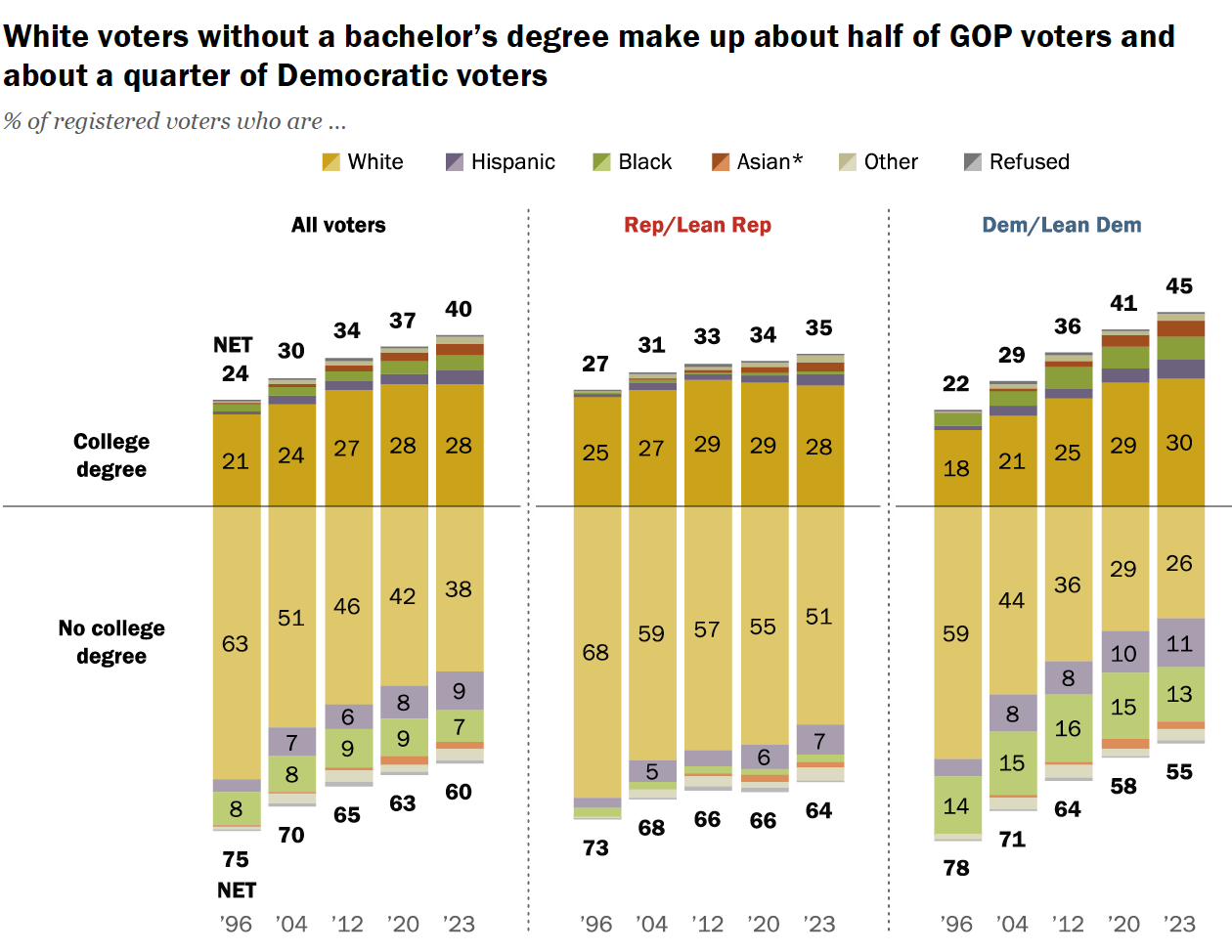
This part isn't found in the literature on class dealignment; it's just my take after reading about working class voting trends in the 21st century: Anger and resentment among non-college educated people has created a directionless rage that has mostly funneled toward the major political party steeped in an imagined past of (white) working class glory promising endless suffering for the hated Other. The Democratic Party, captured by capital like every other major political party on earth, offers a brand of normalcy and technocratic policy making that has proven insufficient as an outlet for this working class rage. Anger is not satiated by well-meaning means testing.
The overly-educated libs have to pay, according to the logic undergirding class dealignment. It is the zenith of owning the libs.
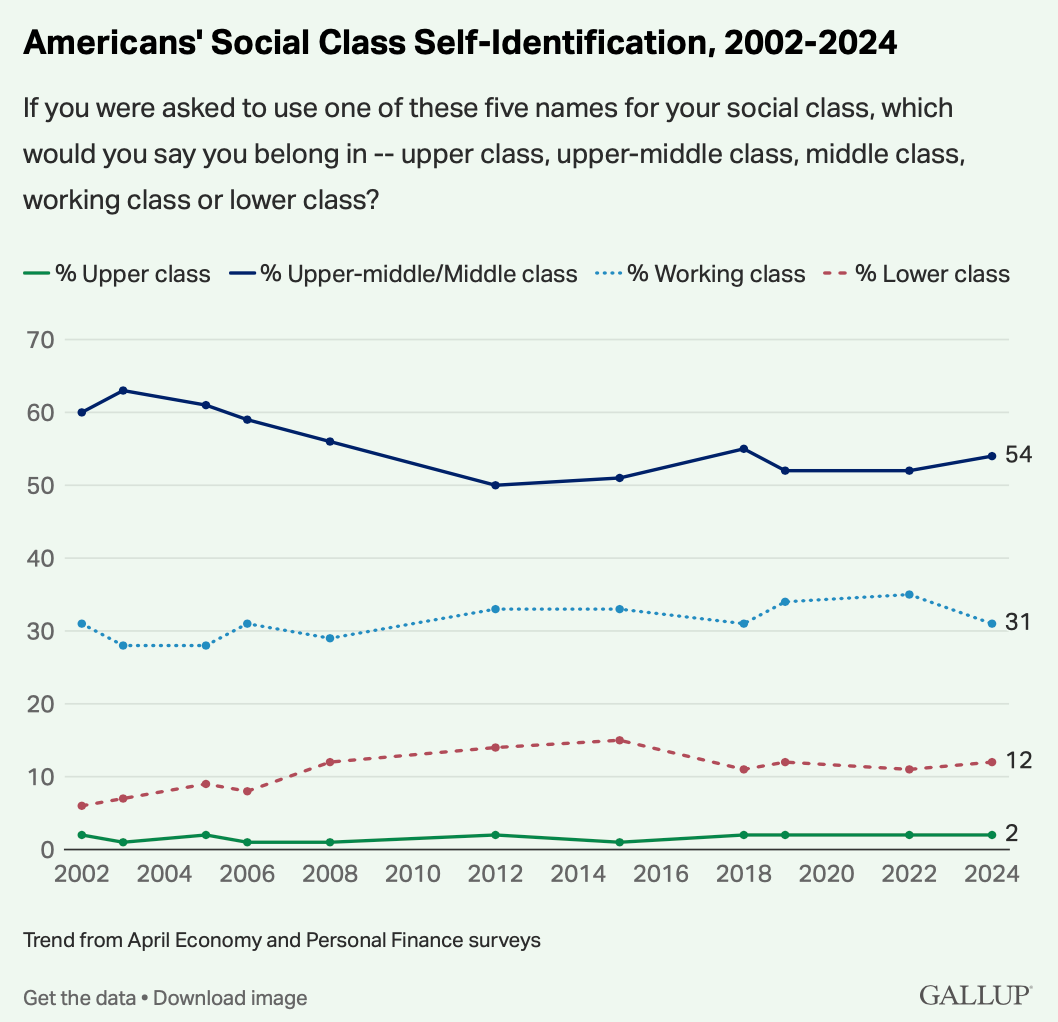
A truer, realer appeal to working-class voters in the United States today would include a reminder to those who consider themselves middle class that they are one setback away from slipping down a rung or two of the economic ladder, that they too are in precarious economic situations whether or not they acknowledge it, or are able to recognize it.
Platner's Senate run was tragic for various reasons. He had the jarring hubris to run for Congress knowing full well that he had for decades terrorized women and left a trail of wildly misogynist comments on the internet for anyone to find. He took every opportunity to set the record straight and instead lied some more – like Trump, but leftishly. And he pretended to be something he is not: A worker living on the edge of poverty, doing his best to get by one day to the next, occasionally glancing up through the rain, wondering which of the oligarchs to blame.
Platner is hardly the first politician to do working class cosplay. Millennials, in what was for many of us our first presidential election, had to suffer the indignity of voting for John Kerry after Kerry – a fortunate son by any definition – dressed up as what his handlers saw as a down-home everyday American, hunting gear and all. Kerry faced off that year against an idiot scion of an oil dynasty who had the cameras film him "clearing brush" on his daddy's Texas farm as a way of relating to the everyday working class American who also, apparently, "clears brush."
All of it was fakery and we knew it. I think we would have rather had Kerry – and Al Gore before him – stand up and say look, I come from immense wealth, I have so much fucking money you would not believe it. I also see the economic pain you face and I want to help. Here's how.
Some honesty would be nice in an age where nothing is real. It's insulting to adopt working class aesthetics as some sort of trick, a stunt meant to convince a poor family that I am one of you people. While working class heroes can take many forms, the hero must be authentic. Platner was not.
Follow Denny Carter on Bluesky at @dennycarter.bsky.social