Winning, Losing, And The Platner Problem
Graham Platner is the ultimate test of the Blue No Matter Who approach to American politics

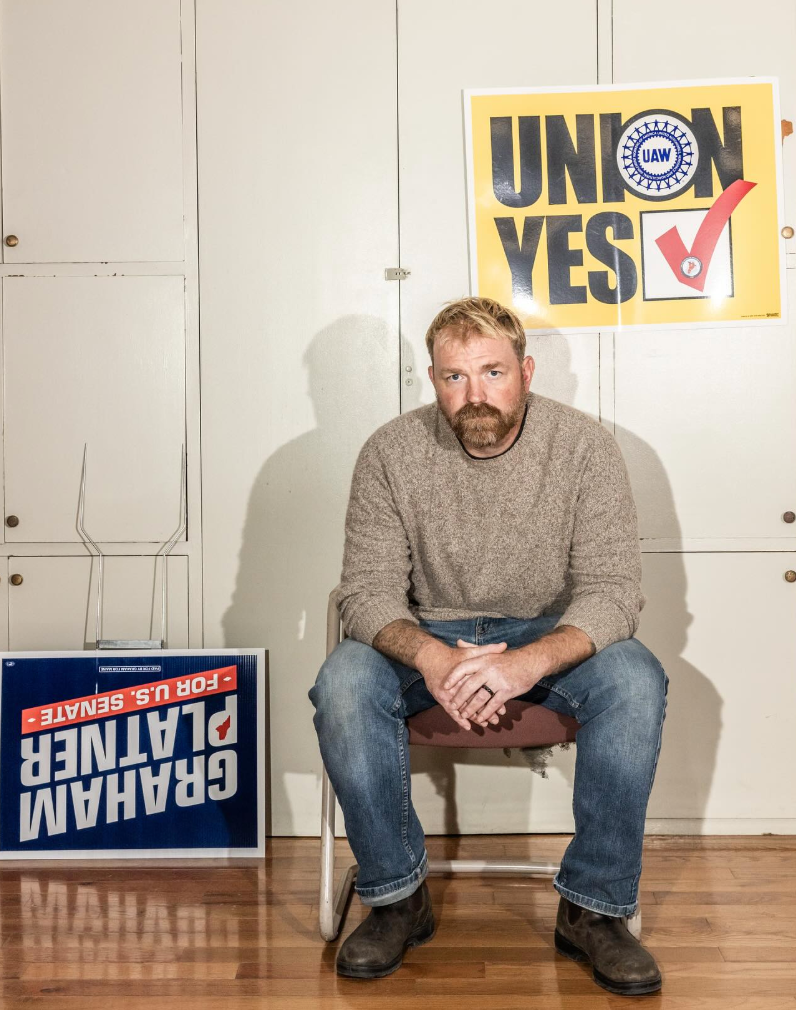
This week I'm writing an old-fashioned BFT analysis of Maine Senate candidate Graham Platner's thoughts and proposals for battling the bad-faith jurists who dominate SCOTUS. Before I publish that blog, I wanted to tell you, the BFT newsletter getter, that I have (very) intentionally avoided writing and talking about Platner because he is rightfully a divisive figure.
Let's put it this way: When I log onto Bluesky and I see folks I like and respect insulting each other in unspeakable ways, when I see online relationships turning to dust with every reply, I know without even looking that the original post was about Graham Platner the oyster knower. And I'm always right.
Bad Faith Times is an exclusively subscriber-supported publication. If you're not able to join BFT supporters (we gather in the lovely BFT discord community), then please consider sharing BFT blog posts and podcasts with friends and family, and perhaps on your social channels.
Now that he's all but clinched the Democratic Party nomination for the U.S. Senate seat in Maine, I feel obliged to touch the scalding Platner stove and offer my view of a candidate you find either inspiring or nauseating, with nothing in between.
It starts, as always, with Platner's nazi tattoo. That's what it is, or was, I suppose, since he got it covered up with some sort of ink glob. I think it's best if we are honest about this. We don't know what Platner did or did not know about the nazi symbol when he got it tattooed to his chest while on military leave. Maybe Platner is ignorant or just kinda dumb. Maybe he's susceptible to peer pressure. Maybe he knew exactly what the tattoo meant and he – like many young men with politics miles outside the American mainstream – had a dalliance with fascism.
The radicalism and anti-establishment ethos of fascism might have seemed to young Graham like a palatable solution to overturning the existing order and making things right for the people. Which people? Well, therein lies the problem.

A young Graham Platner would not be the first (or last) young white man to float like a Saturday morning cartoon character toward the freshly-baked fascist pie sitting on the windowsill. Mussolini, for one, had an easy time recruiting thousands and thousands of young men to his cause with the false promise of revolution, the overthrow of the ruling class and a million years of working class dictatorship.
Mussolini and his allies focused their recruitment efforts on Italian communist and socialist organizations, filled with young guys who were politically frustrated and seeking anyone who would commit to antagonizing the rich and powerful and making life slightly less bleak for working people (like all fascist movements, Mussolini's became an unflinching ally and defender of the capitalist class). Young guys have always been attracted to thrill-seeking behavior, and what is more thrilling than overthrowing the rich and powerful and turning society on its head?
Just sign on the line, Mussolini told these idealistic young men, and we will Get Things Done.
 Denny Carter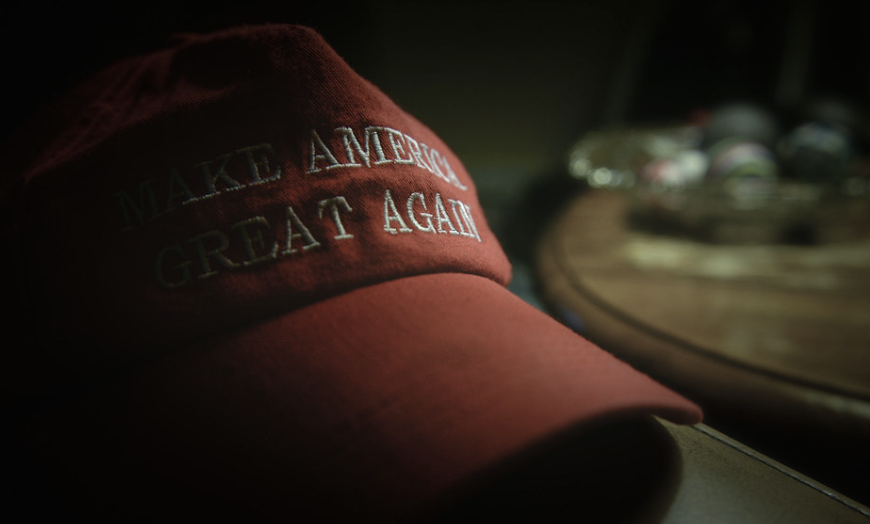
When I see this – when a young white guy drifts toward fascist thought – I think of David Bowie and his flirtation with naziism during his drug-addled early and mid-1970s. Bowie was into some fucked-up fascist shit. I tried, as a big Bowie guy, to deny that for a long time; it was too much to bear for a 21st century blogger and poster prone to condemnation. Eventually I accepted it.
Like Platner's nazi tattoo, it was what it was: A cocaine-addled Bowie spoke glowingly of Adolf Hitler as a rock star and dressed up as the fascist Thin White Duke character because he had dismissed flower-power, left-wing politics for what he saw as a politics that could Get Things Done – a big thing for Bowie throughout his life. What things needed to be done? Well, therein lies the problem.
Bowie was lucky to have gained worldwide fame in an era before social media. I think he knew as much; you can hear it in a song like 2013's The Stars (Are Out Tonight). If his gross fascist nonsense had been splashed on every major social media platform, he might not have had the chance – or the desire – to make what you might call post-fascist woke albums like 1979's Lodger, with its grudging acknowledgement that we're all in this shit together, and 1980's Scary Monsters And Super Creeps, which deals with the sudden and terrifying rise of right-wing political figures in liberal democracies. Bowie might've never written a song in which he decries "white trash picking up nazi flags" and American politicians ignoring the poison of "supremacist hate."
There's vanishingly little doubt Bowie – if he had come of age in the 2000s – would have been denied the grace that some white men need to emerge from dark places and hateful, destructive worldviews. Perhaps that's what Bowie deserved: A life destroyed, a reputation ruined, a career erased from the history books. Indeed, love has never been popular movement and Bowie would not have received any. So it goes.
I understand how unpalatable this framing might be. That marginalized groups are the ones who are always asked to offer grace and forgiveness is unfair and unjust. I wish it were different. I wish my fellow white guys didn't require so much grace and forgiveness. We do though, and an effective anti-fascist politics will be impossible without it.
It is heartening and refreshing to look back on the horrid things Bowie cast aside in the late 1970s and early 1980s. He'd go on to loudly and publicly support artists of color in the 80s and 90s. Probably you've seen the clip of a stone faced Bowie chastising an MTV reporter for the network's refusal to play music videos from Black and brown artists outside of the wee hours of the morning. He lived out his second half of life as woke as a wealthy white British man can be. For that I'm happy.
I don't condone Platner's nazi tattoo. I can't. Power is power though, and barring a Fettermanesque post-election stroke, Platner is going to caucus with Senate Democrats on every issue, or almost every issue. Susan Collins won't. That's the only reason I hope Platner wins Maine's Senate seat. That's the only reason I need.
Denny Carter
It comes down to winning and losing. Do you want to see a Republican Senate seat stay in Republican hands, or do you want to see it flipped? If it's the former and you live in Maine, you will vote for Collins or support a third-party candidate with zero percent chance of winning. Or maybe you won't vote, which is fine. If you take this path – if you can't stomach casting a vote for the guy who once got a nazi symbol tattooed on his body – then you have to know you are choosing to lose. That's not an accusation. It's not a stretch by any means. It's certainly not a hypothetical.
Engaging in politics designed to win by any means necessary leaves almost no one feeling good about themselves (and yes, winning is always worth it in a zero sum game). If feeling good and clean and pure is the goal of your politics, you have every justification for voting against Platner or convincing others online not to support his Senate campaign. I would not feel great about casting a ballot for the oyster guy with the nazi tat, just as I didn't feel great about voting for Hillary Clinton in 2016 after backing the aspirational Bernie Sanders campaign for more than a year. I voted for Clinton though. If you didn't, you offered your tacit support for the first Trump administration. That's just the practical reality of the whole thing.
A football analytics geek might describe Platner as a high-variance candidate. His politics, according to people who knew him growing up and during his time in the military and as a mercenary, have always been a little kooky. Platner in high school used to cosplay as a communist revolutionary, suspenders and red arm band and all. He's a little nuts, with a severe case of main character syndrome.
Could Platner become Fetterman Lite? Perhaps, but I think that's a 1 percentile outcome. Fetterman, the worst congressional Democrat in modern history, is reportedly in talks with Trump intermediaries about switching parties come 2027.
Platner, barring brain injury, will most likely continue extolling the virtues of working class politics and occasionally flaming his Democratic colleagues for taking money from oligarchs who no longer have any limits on the politicians they can buy. Platner could be something close to millennial Bernie Sanders in that his working class priorities will be blocked at every turn and he will rage in a corner of the Senate until maybe one day he runs a noisy and inspirational but ultimately unsuccessful presidential campaign. I could be underestimating the uniqueness of Sanders, the last vestige of New Deal-era progressive politics.
Platner at worst is an interesting test of the Vote Blue No Matter Who theory of politics in this age of rising fascism and rapid democratic decline. The question of the Blue No Matter Who approach is simple: Do you want a Democrat or a Republican in office? Anything beyond that is discourse that can and should happen well before candidates are chosen to fill critically important seats.
Blue No Matter Who is often derided online as idiotic politics, as something on par with the explicitly fascist MAGA movement that will support any Republican in any race. It also happens to work if you're interested in attaining and wielding power.
Follow Denny Carter on Bluesky at @dennycarter.bsky.social