The Libs Must Be Owned
Clarence Thomas' judicial philosophy is rooted in extraordinarily bad faith

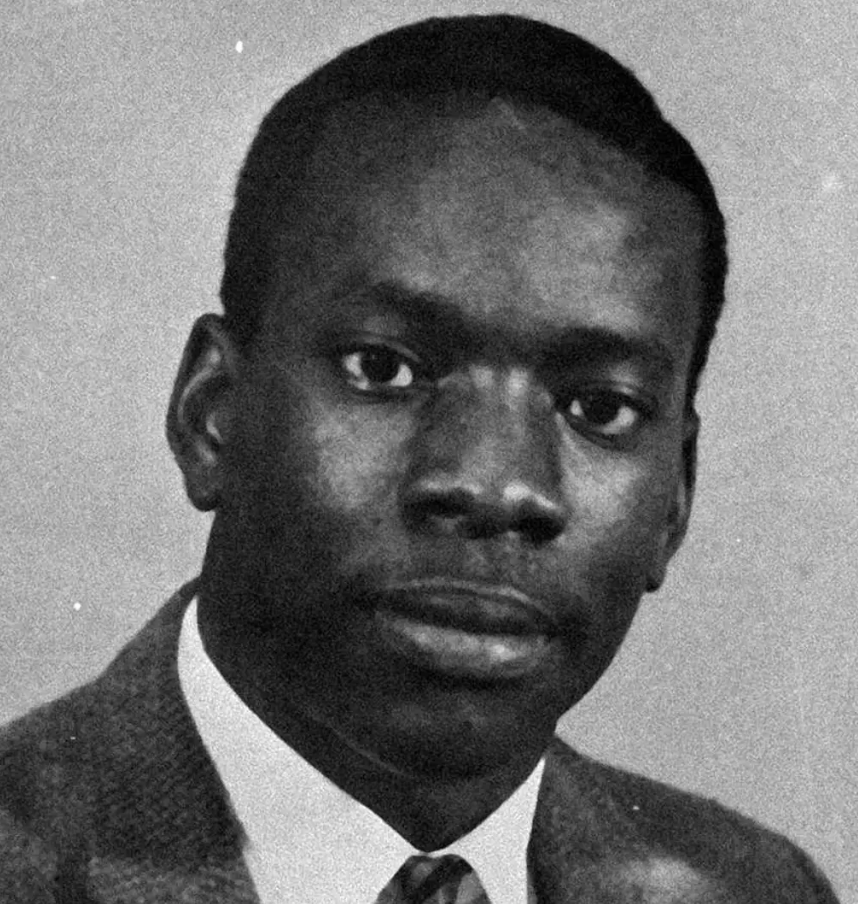
It’s a strange thing to watch Clarence Thomas speak of the evils of segregation and systemic racism a few months after happily helping white lawmakers create electoral maps that flagrantly dilute the political power of Black people.
From his seat on the Supreme Court, while being showered with cash and gifts by billionaires who have benefited from his reliably anti-labor rulings, Thomas has been a cheerleader for every policy or executive order designed to entrench and perpetuate white supremacy. Though he doesn’t say much, Thomas’ SCOTUS record is one that fully embraces and legitimizes a deeply unfair and unfree United States.
It’s all to own the libs, naturally.
Bad Faith Times is an entirely reader-supported publication. Consider subscribing or leaving a tip!
Thomas last spring gave a speech to University of Texas at Austin students in which he detailed his lived experience growing up in the US before the Civil Rights Act, before segregation was made illegal. It was strange to read about tales of racism – widely accepted and even genteel in some cases – knowing that the young man who endured this unfair treatment and watched other Black Americans struggle to be treated with dignity and respect would grow up to become one of history's most conservative Supreme Court justices, one who would join the Court's far-right majority in proclaiming race-conscious college admissions policies as racist toward white Americans. It was Thomas who in 2007 said (in bad faith) racial isolation doesn't necessarily impact educational outcomes.
Thomas' faith, I think, is bad, or at least not good, since there's no way someone with his lived experience could truly believe a policy meant to give people of color a fair chance at college admission could constitute discrimination against white folks. The libs, however, must be owned. So affirmative action is no more.
Thomas' judicial philosophy – as far as he actually has one – is exactly what Thurgood Marshall warned against in his final days as a Supreme Court justice. It had become clear to Marshall – decades before it became clear to elected Democrats and their political allies – that "power, not reason" was the new "currency" of the land's highest court. The up-and-coming Reagan era right-wing jurists, Marshall saw, would make decisions and overturn long-standing legal precedent because they could; it had nothing to do with their careful and honest interpretation of the constitution. Thomas, the man who tragically replaced Marshall on the Court, was chief among those who had no judicial philosophy beyond wielding unchecked power against his perceived political enemies. In this way Thomas' three and a half decades on the Court have been one long revenge tour.
Marshall, if he were alive today, would have called Thomas' approach to the law "lib ownage" or some such. It certainly has nothing to do with a faithful interpretation of basic constitutional law. The libs, however, must be owned.
Watching Thomas speak to college students in 2026 about the discriminatory laws that were wiped away with passage and enforcement of the Civil Rights Act and the Voting Rights Act – which Thomas has worked tirelessly to dismantle – was almost disorienting. How could a man who had grown up in the remnants of Jim Crow and endured its various and endless indignities tell modern-day college students that the Declaration of Independence was and is incompatible with progressive policymaking meant to address those very systemic injustices?
The answer, per Thomas, was that the government has nothing to do with enforcing and upholding an equal society. Simply knowing that the Almighty sees us as the same, Thomas said, should be enough.
Despite the multiplicity of laws and customs that reeked of bigotry, it was universally believed among those blacks with whom I lived and who had very little or no formal education, that “in God’s eyes and under our Constitution we are equal.” This was also the case with my nuns, most of whom were Irish immigrants. At home, at school, and at Church, we were taught that we are inherently equal; that equality came from God; and that it could not be diminished by man. We were made in the image and likeness of God. That proposition was not debatable and was beyond the power of man to alter. Others, with power and animus, could treat us as unequal but they lacked the divine power to make us so.
Congressional districts twisted into white supremacist pretzels, modest affirmation action programs in hiring and school admissions set ablaze, governments refusing to step in to defend marginalized groups being targeted by the monied and powerful – none of this should matter, Thomas says, because your freedom comes from God, not from some government official or bureaucrat who might oppose separate-but-equal laws and redlining and polling tests (such as those given by former Supreme Court Chief Justice William Rehnquist).
 Denny Carter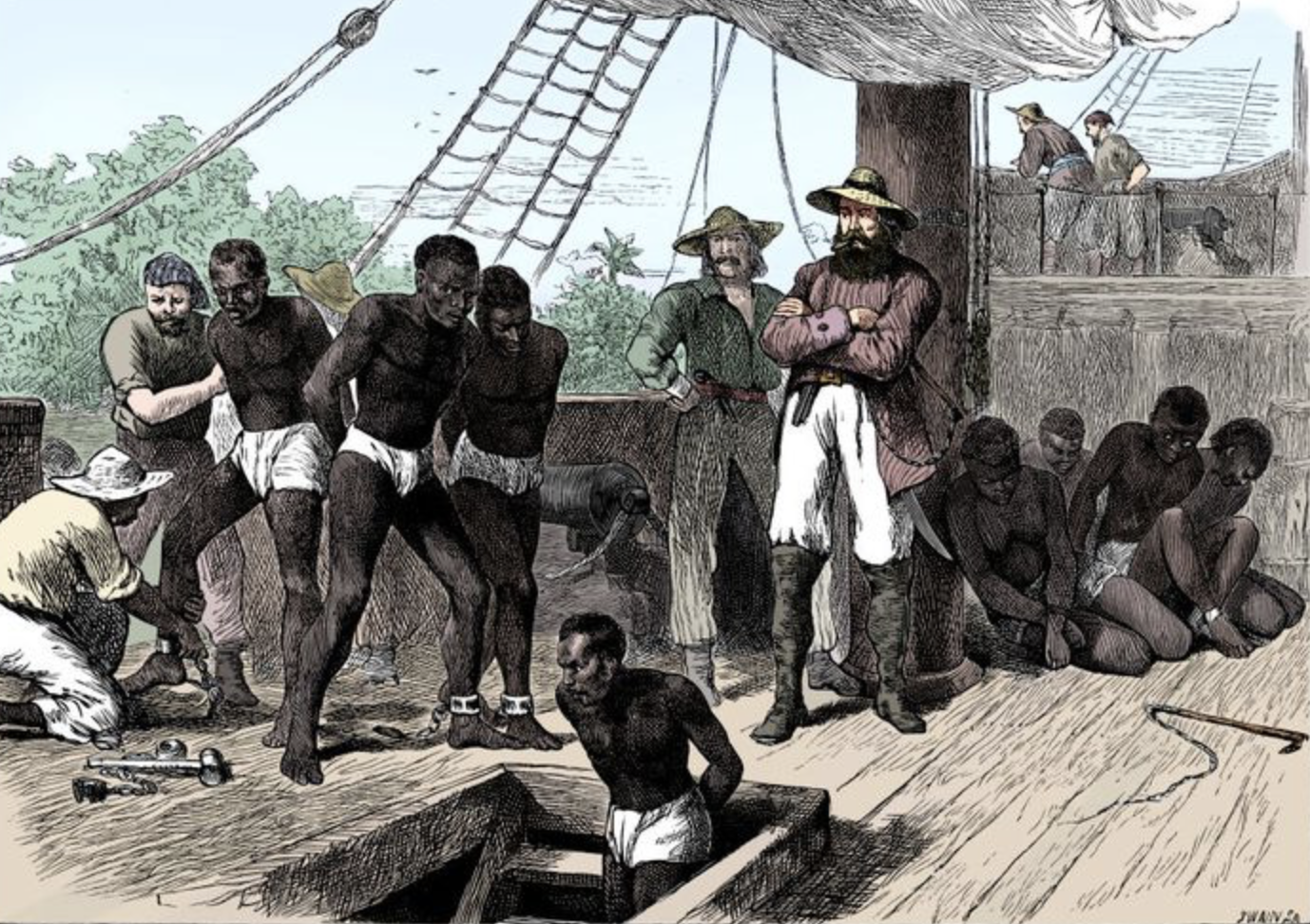
These elected officials and government bureaucrats (libs, by another name) "lack the divine power" that grants them heavenly authority. That these libs want to improve society somewhat matters not.
Thomas' argument that overtly racist government policies have nothing on the judgment of God the Creator is what made him so appealing to conservative American politicians in the 80s and early 90s. They saw an accomplished Black jurist who proclaimed that there's nothing anyone can or should do about white supremacist government policies or actions, that no one could be "diminished by man" because we are made in the likeness of God. Using power and influence to emulate God's universal love and fairness and treatment of his children – to make life on earth a little less bleak for the marginalized – has never entered Thomas' judicial equation in 35 years on the Supreme Court.
God's love, according to Thomas, has no place in the crafting of the law.
Somehow, without formal education, the older people knew that these Godgiven or natural rights preceded and transcended governmental power or authority. When you lived in a segregated world with palpable discrimination and the governments nearest to you enforced laws and customs that promoted unequal treatment, it was obvious that you did not get your rights or your dignity from those governments, but from God. Though not a literate man, my grandfather often spoke of our rights and obligations coming from God, not from the architects of segregation and discrimination. Men were not angels. They were subject to the constraints of antecedent rights. And, we were not subject to them even as we were subjected to their whims. We knew that life, liberty, and property were sacrosanct. These truths were self-evident to the adults in our lives and were taught to us as undeniable truths. Those around us could endure with dignity the insults of segregation because they knew that, in God’s eyes, they were equal.
It is remarkable that a man who can speak so eloquently of segregation's immense and self-evident moral failings can then use his time on the Supreme Court to support efforts to cement white supremacist power on every level of American government, from the White House to the Congress to state legislatures and even county-level government bodies. This made no sense to me – or to you, I'd guess – until I understood that Thomas sees unpopularity as confirmation that you are doing the right thing and following God's will, which always falls nicely in line with a person's worldview. If people hate you for your decision making, you're on the right path, Thomas says (in bad faith).
In his Texas speech, Thomas excoriated the late 19th century and early 20th century SCOTUS justices who upheld government-endorsed segregation, most poignantly in 1896's Plessy v. Ferguson decision.
It could not have taken my Court sixty years to know that Plessy was a hideous wrong and that racial segregation was grossly incompatible with our colorblind Constitution. The Justices must have known it all along. The right thing to do, as Justice Harlan spelled out his lone dissent at the time, was obvious, as it so often is. What stood in the way was cowardice. The Justices were afraid of the societal consequences. They were afraid of coming under political fire. They were afraid of losing their social standing. They were afraid of bad press. They were afraid that, if they began to enforce a colorblind Constitution, they would have to address interracial marriage next. So, for sixty disgraceful years, they made American children like me grow up in a racial caste system because it was easier to do nothing than to do the right thing.
It's no coincidence that Thomas mentions colorblindness as a guiding judicial light. It is the bad faith concept of colorblindness that has animated nearly every race-related decision the Roberts Court has made over these past 20 years. Colorblindness has been the skeleton key to unwinding the gains of the 20th century, to owning the libs after they thought they had won. Thomas and his Republican colleagues on the Roberts Court know this and act accordingly.
 Denny Carter
Thomas, in his speech to University of Texas students, said the "principles of the Declaration of Independence" are not something one can "learn in college or law school." Those principles, he charges, are something you feel in your soul because God passed down the Declaration of Independence to the founders of the United States, who saw fit to deprive Thomas' descendants of the most basic rights and humanity dignity, to enslave them and exploit their labor and later, once that became unpalatable for some white folks, to kill them extrajudicially and push them to the periphery of American society and violently deny them entry into the country's halls of power.
Intellectuals – libs – "want you to believe that our founding principles are matters of esoteric philosophy or sophisticated debate," Thomas told the gathering of impressionable young people at the University of Texas, his main billionaire benefactor, Harlan Crow, in attendance. Discussing what these principles mean in the interpretation of constitutional law, he said, "overcomplicates" things and "takes the spirit out of them."
Thomas pines for a U.S. judiciary that does less thinking and more feeling, for with more feeling comes acceptance of the nonsense judicial philosophy he has embraced for decades: That God is the sole arbiter of justice and that humankind is foolish to pretend otherwise. It is an approach to American law that allows for all kinds of anti-constitutional rulings, a specialty of Thomas' during the country's descent into authoritarianism.
It seems not to matter to Thomas that American democracy bleeding out, desperate for a political or legal tourniquet. The libs, after all, must be owned.
Follow Denny Carter on BlueSky at @dennycarter.bsky.social.