You Are Valuable Because You Exist. The Machine Is Not.
Distinguishing between humans and machines might be the first step in freeing ourselves from the machines.
Blinded By The Light – a “banger” in zoomer parlance – had just played on the local classic rock station when I heard it for the first time: Assurance that a robot was not determining what was being played for this radio audience, that an algorithm was not in charge.
“Big 100,” the voice-over boomed, announcing the name of the D.C.-area station formerly known as Oldies 100, before Nirvana became classic rock for some reason. “One hundred percent human.”
Support the reader-backed Bad Faith Times with $5 a month and join the Bad Faith Times discord channel. You can also subscribe for free.
I’ve since heard variations of this anti-AI pronouncement on other local radio stations. Even the easy listening station is doing it. One station told listeners they could tell people were in charge of the music because there were still mistakes being made by imperfect deejays. “We still fuck up and that’s good” was the message. Another said something about a machine being unable to rock out. The message was clear in any case: The communal experience of listening to music over the radio had not been ceded to machines that don’t know shit about Manfred Mann's Earth Band or what it’s like to be revved up like a deuce, things of that nature.
The backlash to the AI industry’s assault on humanity – and the dominance of internet-connected life – isn’t tough to spot today. The radio is rejecting AI control; subway ads are offering ways to listen to music without the nuisance of your phone and all its dopamine-drenched distractions; there are bars and restaurants in every major American city that ban phones for patrons and staff alike ("Life needs to be more like this."); YouTube videos are showing folks how to get along with a humble flip phone; and social media users are staging online riots against AI-fueled tools.
 Denny Carter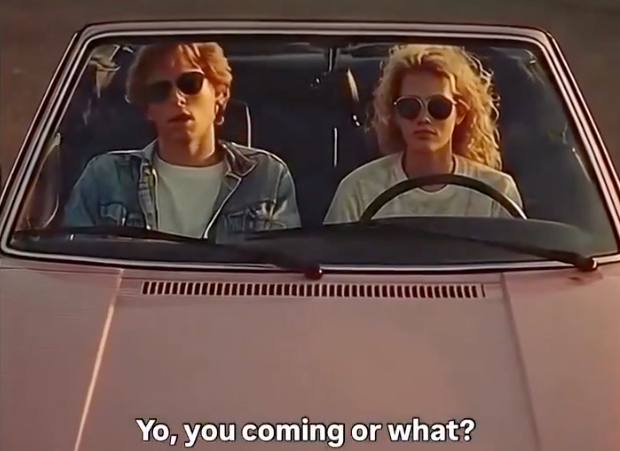
It’s hardly a stunning development. People are exhausted from years and years of a phone-dictated life, of being yanked this way and that way by the machine’s beeping and booping and notifications from friends and family and corporations and news outlets and apps, all of which seem important, even critical. It feels, after however many years we’ve lived this way, like a hundred steel funnels have been gouged into your brain, all of them sucking up your attention until you have none left to observe the chirping bird in the tree or the the purple of a sunrise or the look in your kid’s eye when all they want is your attention, which of course you have already given away to the machine.
Think of what it’s like to be a child in this cursed, tech-heavy age. Every moment of every day is a competition with the machine. You compete for your parents’ attention and you compete for your friends’ attention and maybe you compete for the attention of your teachers and coaches and everyone else trained by Silicon Valley tech-fascists to respond like Pavlov’s dogs to the buzzing or beeping in their pocket. You get tired of this eternal competition so you give in and you offer up your attention to the machine-god with all its colorful avenues to wasted time and resources and life.
A child realizes sooner or later that there really is no competition; they understand that they never really had a chance against the robot designed to wreck the human brain, to soak it with dopamine until it belonged to the company that made the robot. No human can be as compelling as the machine, the child realized. Real life stands no chance against the fake life offered by the machine.
 Denny Carter
The BFT readers know I’m speaking from experience as a tragically-online elder millennial who has decided to sell pieces of himself on the internet in exchange for money. It’s an arrangement many of us have accepted as justifiable, even normal, maybe even good. I convert chunks of my life into online content – via microblogging, via video, via picture, via podcast, via blog post – and I get some money for it. As long as I don't give everything away, I think this can work. I think I can live with this arrangement.
This means, of course, that I’m tethered to my fucking phone in ways that, upon reflection, make me sick. I’ve seen the look in my children’s eyes when they know they’re locked in battle with the machine for their dad’s attention. It doesn’t really matter what I’m doing with my phone at that moment, whether it’s scrolling through the doom of fascist resurgence or watching a sports highlight or ordering groceries for pick-up or arranging a Sunday dinner with my parents. The kid can see my attention (love?) is flowing elsewhere at the moment.
Sometimes my kids will say something about the phone and the attention I pay it. Sometimes they’ll use the word “addiction” in a half-joking way and I’ll bristle and kick into defensive mode because I know they’re right and I hate it. I hate that this is the example I’m setting while banning YouTube and TikTok and smartphones for them in hopes they can experience childhood before being taken in by the machines. It’s when I’m called out like this that I set down my phone in another room and try to function without it for a while. Then my wife will ask why I wasn’t answering my texts. She had a question about the kids’ schedules or about dinner plans and I was nowhere to be found. I can almost hear the machine snickering.
You can’t live without me, it says. Fuck you, I respond because I know it’s correct.
We Are Not Stochastic Parrots, Actually
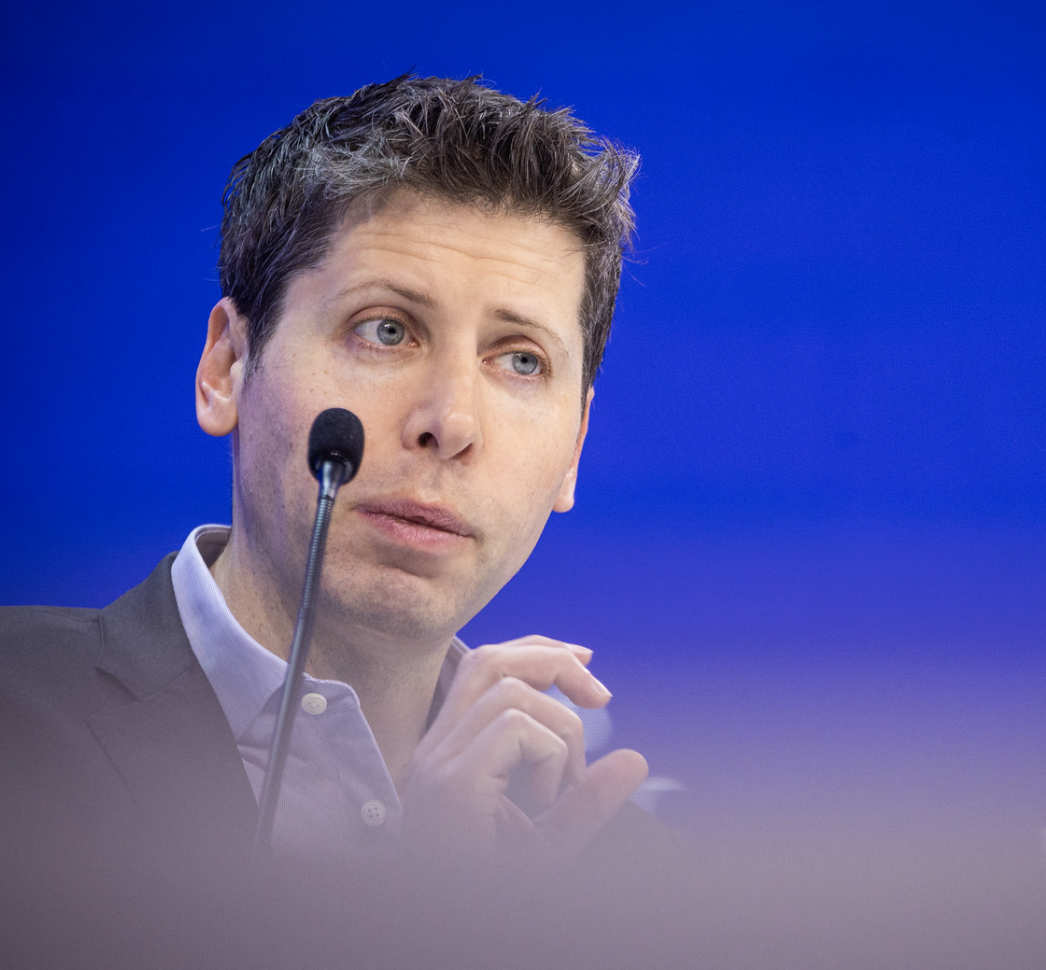
This week I was unfortunate to come across an old Twitter/X post from Sam Altman, CEO of OpenAI and one of the many trillionaire tech freaks who want to replace humanity with machines, in which he said he is "stochastic parrot."
You, he added, are also a stochastic parrot.

Dr. Emily M. Bender, a professor of linguistics at the University of Washington, popularized the term "stochastic parrot" in a 2021 research paper framing large language models (LLMs) as "systems that statistically mimic text without real understanding." These models, taking in reams of data and being expected by their creators to optimize the world, are simply "stitching together sequences of linguistic forms observed in its vast training data, according to probabilistic information about how they combine, but without any reference to meaning," Bender wrote in her paper.
With shitty datasets and other limitations that come with not being human, these language models can be "dangerously wrong," Bender charged. Perhaps wrong enough to drop a bomb on Iranian schoolgirls instead of a military base. Who knows.
Altman, like other warped Silicon Valley monsters, saw Bender's critique of LLMs and dismissed it all by comparing people to language models. Humans, Altman implies, are nothing but automatons controlled and manipulated by data inputs. I would call this a bleak take on the nature of humanity but that doesn't quite cut it.
Ridicule as praxis. That's the advice from Dr. Alex Hanna and Dr. Emily M. Bender, authors of "The AI Con: How to Fight Big Tech’s Hype and Create the Future We Want," when it comes to Big Tech bros. @samleecole.bsky.social talks to them for the 404 pod. Watch now: www.youtube.com/watch?v=UwBZ...
— 404 Media (@404media.co) 2026-03-31T14:21:30.143Z
The implication is terribly clear: Humans, like language models, are only as accurate and valuable as their data sets allow them to be. Without the proper inputs, both man and machine are suboptimal and unworthy. To compare a person to a machine is a wholesale rejection of human rights. Maybe that's the point though.
“We are valuable because we exist,” Bender said during a fascinating discussion on the 404 Media Podcast, painstakingly tearing apart Altman's worldview. Bender's quote leads to a natural and correct conclusion: Machines and robots and algorithms are not valuable because they exist. It's a difference utterly unrecognized by Altman and his ilk. I'd like to say this is strictly for business purposes – for making the line go up forever – but I'm not so sure.
You don't have to be extraordinary, and be tremendously useful to society not to be considered subhuman. You just have to be.
— Comfortably Numb (@numb.comfortab.ly) 2026-04-01T23:20:01.179Z
There should be no test for human value. It's not complicated.
I listened to Bender's critiques of the insidious AI industry, trying their best to force their shitty products on us and threatening eternal economic doom if we don't play their little fucking game, and I thought of all the people who want to be free of the anti-human billionaires doing everything they can to usher in a post-human world. "Nothing human makes it out of the near-future," as Nick Land, the godfather of the tech accelerationist movement, once said.
Altman, for his part, is full committed to a future without humanity. Everything Altman does today is working toward that eventuality.
"Our phones control us and tell us what to do when; social media feeds determine how we feel; search engines decide what we think. The algorithms that make all this happen are no longer understood by any one person," Altman once said. "This probably cannot be stopped. As we have learned, scientific advancement eventually happens if the laws of physics do not prevent it. … We will be the first species ever to design our own descendants. My guess is that we can either be the biological bootloader for digital intelligence and then fade into an evolutionary tree branch, or we can figure out what a successful merge looks like."
Think of this drive to equate human with machine next time you read a story about some Silicon Valley programmer losing their mind and quitting their job and writing a batty manifesto about the robot they programmed achieving consciousness. Think of it the next time you see someone online chastise someone for using the term "clanker" to belittle AI products designed to pretend as if they are human (the AI pornbot ads I see on Meta platforms are truly abominable and clearly created in a lab to create generations of incels, but that's a blog for another day).
No matter how many wretched technological advancements we witness, remember there is major incentive for Sam Altman and Elon Musk and deranged Palantir CEO Alex Karp – perhaps the most dangerous man alive – to put machines on equal footing with people. Doing so makes them money, advances their heinous politics, and turns them into God. We killed God only to see God replaced by billionaire nihilists hopped up on amphetamines. Sometimes I wonder if we made the right call there.
It's no wonder people want public spaces without the scourge of devices and ways to listen to music without a machine sinking its teeth into your brainstem. It's no wonder kids see their parents sucked into this nightmare world one notification at a time and see something very wrong, very dark. No one wants to be a "bootloader" for some species of killer machines that were made to maximize shareholder profits.
 Denny Carter
Altman's comments and Bender's takedown of those comments brought me back to a rather pointed critique of a BFT blog from late August about a series of disturbing AI-generated videos depicting people from bygone eras – the 80s most prominently – telling people in the third decade of the 21st century to "come back" to a better and simpler and easier time.
A BFT reader excoriated my take on the nostalgia porn and those who buy into the idea of a glorious past that never existed, and said maybe people today – young folks especially – are dying for something real in their lives, for a life outside the phone or the laptop or the tablet. They are ravenous for human connection, this reader said.
That's right, I think, and a key to finding and forging that connection is rejecting any comparison of a human being and machine. You have intrinsic value – it's baked into you – and the machine does not, no matter what frothing AI pushers might say.
Follow Denny Carter on BlueSky at @dennycarter.bsky.social.
Comments ()