We’re Going To Need So Much Judicial Review
The stain of the Roberts Court must be scrubbed out of the national fabric. There's really only one way to do that.
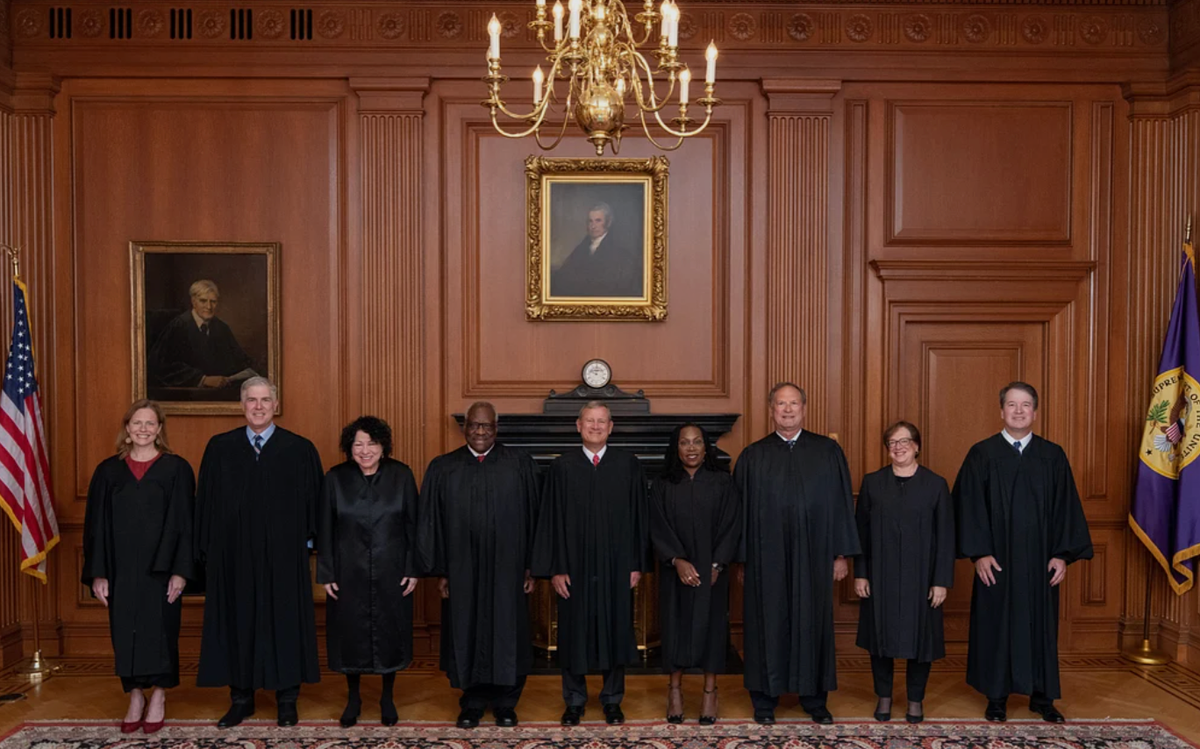
Just because a handful of corrupt, anti-constitutional jurists on the country’s highest court have weaponized a core concept of constitutional jurisprudence, doesn’t mean it’s bad.
As a guy who has blogged roughly one thousands times over the past four years about ways to protect constitutional democracy from right-wing judges who have spent their lives studying the bad-faith dark arts, I fully understand your impetus to reject any and every tactic used by John Roberts and his nakedly anti-American right-wing Supreme Court majority.
Support the reader-backed Bad Faith Times with $5 a month and join the Bad Faith Times discord channel. You can also subscribe for free.
It’s this reflexive rejection of the Roberts Court’s dishonest and anti-democracy tactics that might lead one to take a hard and fast stance against judicial review, the legal concept that has allowed this Supreme Court to revisit long-held constitutional precedents and dismantle them one at a time in service of the oligarch class for whom they serve and the radicalized Republican Party for whom they enable.
Judicial review must be bad, you might say because you hate what this Court – this captured institution – has done to your country. We must do away with it, the thinking might go in the coming years if pro-democracy liberal justices ever have a majority of elected Democrats do that right thing and reform (expand) the Court. Judicial review, after all, is how the husk or Roe was killed and modest limitations on campaign contributions were undone. It’s how Roberts and the Court’s right wing have delivered body blows to the Voting Rights Act, which will be effectively wiped away in the coming months. Judicial review is how this deeply corrupt and wildly compromised Court has undone the gains of the 20th century, as Thurgood Marshall warned way back in the early 90s.
Here’s the thing though: The vile jurisprudence of the Roberts Court cannot be fixed unless the left embraces judicial review as a corrective measure in bringing the United States back into the democratic fold from which it has steadily drifted since Roberts was tasked with implementing the right’s legal wishlist twenty years ago.
That the current SCOTUS is the first in 70 years to reject civil rights claims in a majority of cases involving women and people of color is no mistake or happy accident. The expansion of basic rights has not just stalled under the Roberts Court; it has been rolled back with glee. It is the plan. It always was.
 Denny Carter
Opposition to judicial review can’t be left-coded now or in the coming years. That judicial review has been deployed in bad faith by radicalized jurists over these past two disorienting decades doesn’t mean judicial review can’t and shouldn’t be used to make things right, to undo their undoing.
The Roberts Court's destruction of basic constitutional rights and its supercharging of capitalist domination can’t be the baseline in whatever comes after the Trump era. The stain of the Roberts Court must be scrubbed out of the national fabric before we can even think of moving forward.
All of the anti-constitutionalism the Court has wrought has to go, and none of that is possible without a shitload of honest-to-god judicial review.
Regimes Turn To Courts To Carry Out Their Dirty Work
How do we know the Supreme Court has abused and weaponized the perfectly mainstream concept of judicial review? Well, one could read some headlines or perhaps one (1) book on the history of the United States, or one could listen to legal researchers who have spent years studying and analyzing this question both in the US and abroad.
I read the research so you didn't have to (and because I have a years-long fixation on ways to defend constitutional governance against those who operate in bad faith).
Denny Carter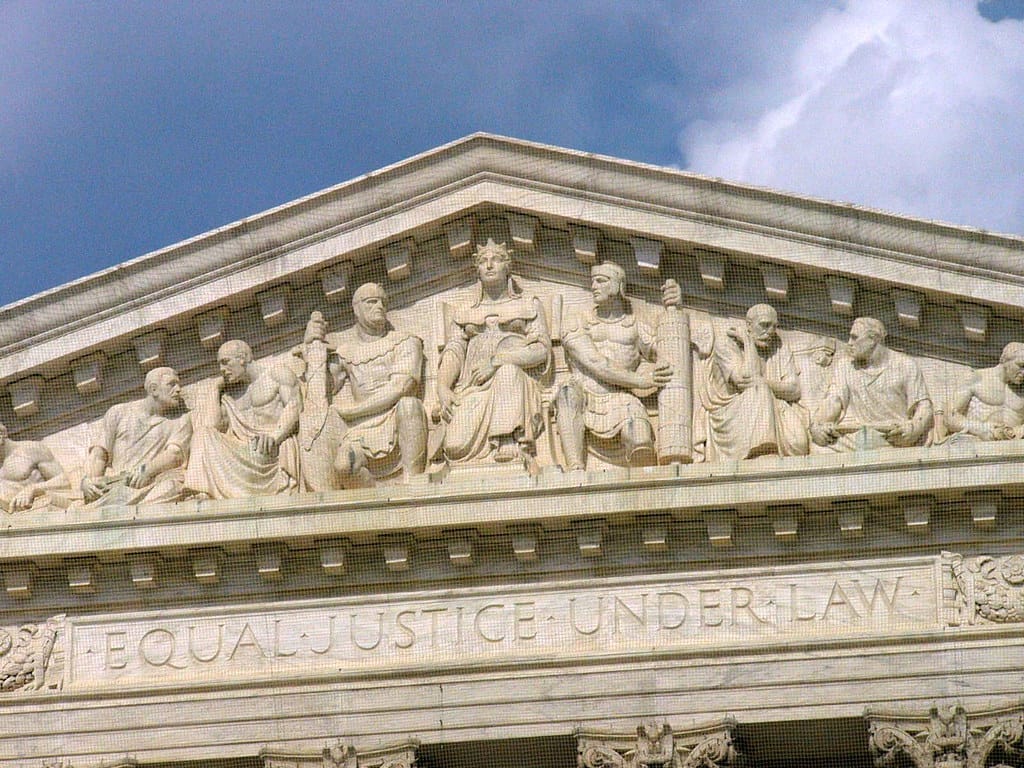
In a 2020 paper published by the University of California Davis, Abusive Judicial Review: Courts Against Democracy, researchers drilled down on the question of when, exactly, we can say for certain that a court – "commonly conceptualized as one of the main defenses against abusive maneuvers" – has engaged in judicial review designed to undermine a republic. "Highly inconsistent use of methodologies or extremely unreasonable interpretations of law are often taken as evidence of bad faith," the researchers conclude.
This, of course, can apply to any number of decisions handed down by the Roberts Court, including that time the Court's right-wing majority said the president – one president, anyway – can commit crimes because the law does not apply to him. Creating a king with a single decision would seem to be an "extremely unreasonable interpretation" of American law.
But I'm no lawyer. I did, however, watch The Firm on cable last week; Tom Cruise's hair never looked quite so good.
It will often be difficult to determine the abusive nature of judicial review based simply on the scope and nature of a court’s reasoning. One needs to look at the context and effects of a judicial decision. But departure by a court from its own established practices and precedents may be one important sign that a court is in fact engaging in knowing forms of abusive judicial review: If a court fails to live up to its own ordinary standards of legal reasoning, this may be one relatively clear sign that it is engaged in abusive forms of review.
So yes, the professional analysis of how the Supreme Court has used judicial review along with its absurdly self-serving Major Questions Doctrine, says these right-wing justices have indeed unleashed the abusive form of judicial review. Roberts and Thomas and Alito and the rest have "intentionally taken aim at the democratic minimum core," as the researchers put it, with their rulings over the past couple decades, most clearly seen in the oligarch-empowering Citizens United decision in 2010, which, as intended, has led to an explosion in billionaire campaign spending. The billionaire class accounted for nearly 20 percent of 2024 federal election spending. No democracy can function this way.
Denny Carter
This is why, as Bad Faith Times has covered extensively during the Trump regime's authoritarian onslaught, the Supreme Court is at war with the rest of the federal judiciary. Almost every other judge – even those appointed by Big Boy himself – have looked upon the regime's unconstitutional edicts and said get the fuck out of here. And sometimes these clear-cut decisions are revisited by a Supreme Court that does not operate under constitutional norms.
The Roberts Court, especially over the past few years, has acted as a crucial backstop against checks on Trump's power. This in turn has given Trump's lawlessness a sheen of respectability and legitimacy in media and institutional circles in the US and across the world.
Regimes turn to courts to carry out their dirty work because, in doing so, they benefit from the associations that judicial review has with democratic constitutional traditions and the rule of law. ... The nature of the practice of abusive judicial review, which masquerades as a legitimate exercise of an institution that is now almost-universally promoted, makes the practice challenging to prevent and respond to. Not all instances of abusive review will succeed, and not all courts will (willingly) engage in the practice. But, we suggest, the practice is likely to be a significant part of the authoritarian toolkit going forward.
The University of California researchers said their findings of how judicial review has been abused in the US and in other, less mature democracies more easily captured by tyrants demonstrate that "the fear espoused by critics of the Supreme Court — that it might stand by passively as democracy is dismantled — is a reasonable one." This is not, they say, the worst outcome in the weaponization of judicial review.
But the prospect of courts standing idly by in the face of an antidemocratic threat is not actually the worst-case scenario. In fact, across a range of countries, would-be authoritarians have fashioned courts into weapons for, rather than against, abusive constitutional change. In some cases, courts have upheld and thus legitimated regime actions that helped actors consolidate power, undermine the opposition, and tilt the electoral playing field heavily in their favor. In other cases, they have gone further and actively attacked democracy by, for example, banning opposition parties, eliminating presidential term limits, and repressing opposition-held institutions.
Has the United States inched into this worst-case territory, where powerful courts serve as weapons against core democratic ideals and principles? The Roberts Court siding with the leader of the American fascist movement in Trump v. United States, I would say, falls firmly into the weaponization realm. With that decision the Supreme Court's conservatives cleared the way for a second Trump term and kept him out of prison for his crimes against the country. Granting him king-like authority was an active assist to the nation's first tyrant.
Should Democrats Simply Amend The Constitution?
There is, as you may know if you too were a Schoolhouse Rock truther, a legislative solution to all this judicial review abuse. Congressional Democrats could just go ahead and pass a constitutional amendment that would restore abortion rights or voting rights or campaign finance limitations.
All they would need is two-thirds approval from both the House and Senate and ratification from three-fourths of the country's state legislatures. They could also simply hold a constitutional convention if 34 state legislatures agree to it. Democrats could do all this and be home in time for dinner.
In a system practically designed for Republican domination – the U.S. Senate, for one, has no place in a functional liberal democracy – this is a nonstarter. The right wing's death grip on mainstream media outlets and the algorithms that dictate our reality all but guarantee Democrats will never enjoy huge congressional majorities that could take on the exceedingly heavy lift of passing a constitutional amendment to counter the abuses of the Roberts Court. It is a small and perhaps fleeting political miracle that Democrats will have any sort of congressional majority in 2027 with the game so thoroughly rigged against them (and liberal democracy more generally).
To leave the Supreme Court unreformed and unexpanded and to rely on the near-impossibility of passing a constitutional amendment is all but giving up against the American right and its various odious aims to make the US a less fair and free place owned and operated by a dozen men who have more money than the rest of us combined. What we face today is nothing short of a constitutional emergency, one that requires action now, not in five or ten or twenty years.
This, of course, assumes it's not already too late to make some key structural changes that might give us a chance against a vast, well-funded right-wing plot to end American democracy. We are not doomers at BFT, so we'll say there is still time.
Good And Bad Things: Exactly The Same?
Would years of judicial review conducted by a reformed SCOTUS – one committed to the aforementioned "democratic minimum core" – constitute abuse and weaponization the same way the Roberts Court has engaged in judicial review abuse and weaponization?
I'm sure Republicans and their vast right-wing media machine would say so. I'm positive the entire American right would lash out in defense of constitutional norms and the vital need to respect Supreme Court precedent as soon as they don't have a chokehold on the Court. The right's reaction to SCOTUS reform would look something like a wounded animal backed into a blood-soaked corner; they would do anything to stave off the change that threatened their existence. They know how important a captured Supreme Court has become in their project to unwind the 20th century, and they know their tactics turned against them would mean the end of the asymmetric warfare that has defined the recent era and puts their enemies on permanent defense.
But in service of restoring the (very) basic legal concepts that make a constitutional republic tick and fend off authoritarian threats to the republic, I don't think pro-democracy judicial review would be abusive in nature. So the answer, I think, is no: Deploying judicial review of the Roberts Court's blatantly unconstitutional rulings would not meet any of the definitions of abuse outlined in legal scholars' research on the matter. Drain the bad faith out of judicial review and you have something good, something necessary for upholding a democratic core.
That judicial review can and has been used against the protection and expansion of constitutional rights and for the empowerment of capital does not mean – cannot mean – that the same legal concept can't be used to alleviate these issues and stop the war between the Supreme Court and the rest of the federal judiciary.
What I'm saying is as controversial today as it's ever been: Good and bad things are not the same. They are in fact quite different.
Follow Denny Carter on Bluesky at @dennycarter.bsky.social.



Comments ()