The American Right Dared To Imagine. Now It's Our Turn.
“It is above all by the imagination that we achieve perception and compassion and hope."

It is with great displeasure that I report the American right wing has quite the imagination.
It was the right that took a thrashing in the second half of the 20th century. Public life in the US was gradually desegregated, Black and brown folks were given full citizenship and voting rights, women won the franchise and bodily autonomy as guaranteed by the constitution, and workers won some basic rights and protections against their bosses. Rights were expanded, multicultural democracy took hold – not everywhere, of course – and progressive jurists were making unapologetic arguments for why and how the constitution can and should be used to make the country a fairer and freer place for all.
Like I said, the right took it in the ear.
That didn't stop American right wingers from imagining a bleaker future. Starting around the time of Barry Goldwater – an unserious far-right loon in his day – American conservatives dared to dream of a return to a United States in which rights and privileges were reserved for those at the tippy top of the hierarchy of oppression: Namely, straight white dudes with money. These guys dared to dream of an America where women had no say over their own fertility and had no place in academia or the workplace. They dreamed of shredding the federal government's legal protections that stopped racist lawmakers in the former Confederacy from disenfranchising Black people who had bled and died for generations for the most basic constitutional rights. These brave American right wingers imagined the repeal of every law meant to stop working people from being exploited by the wealthy and powerful.
 Denny Carter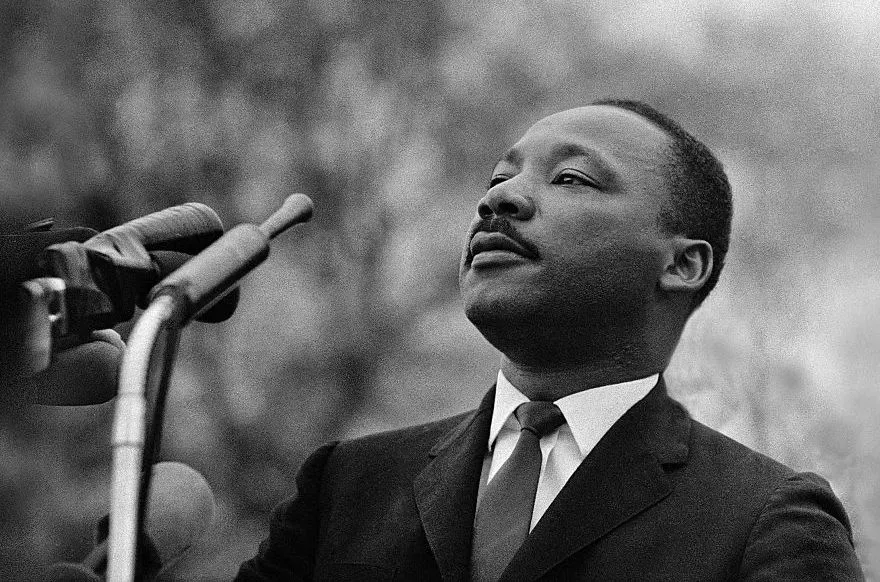
They imagined all these things and in time they achieved them, one and all, primarily through One Weird Trick for dissolving democracy in a vat of toxic sludge: Stealing the Supreme Court and stacking it with enemies of the country. The American right, after getting their shit kicked in again and again in the latter half of the 20th century, would not give up on the dream of a less fair, less free United States. They refused to stop believing that one day they could Make America Great Again. And, as you know, they did – in all the worst ways.
 Follow
There is, I think, perverse inspiration to be drawn from the American right wing's imagination, which created the plans for domination, which delivered the final product, most succinctly seen in Project 2025. Did they think a TV game show host and failed casino magnate would be the one to put the final touches on their grand plan? I would guess no, they did not. That didn't stop them from pushing through and finishing what they had imagined generations ago: The repeal of the 20th century.
Projecting Shared Fantasies Into The External World
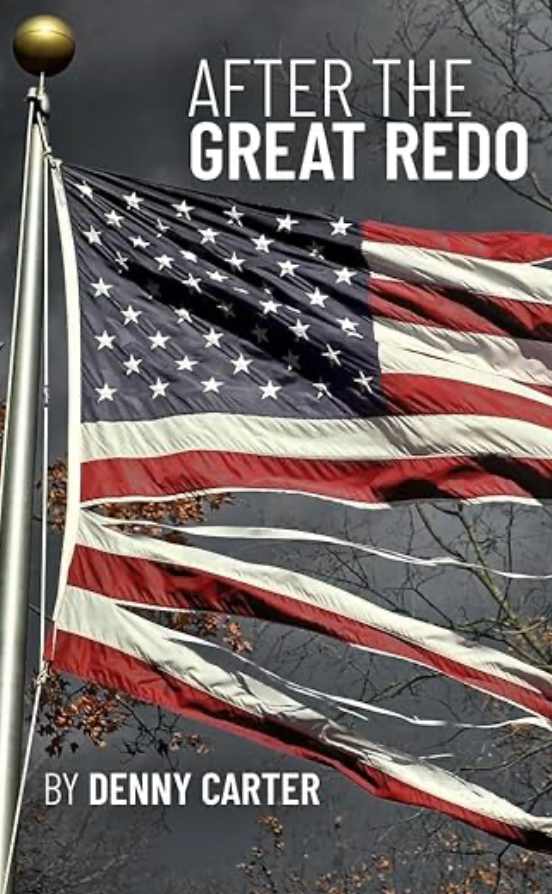
I had all this floating in the recesses of my addled mind while I wrote After The Great Redo, speculative fiction about a near-future progressive rebirth of the United States following an era defined and ruled by fascist politics. The American left – or anyone who opposes the MAGA project, really – long ago stopped imagining what could be and instead chose to believe the lie that the bad guys are invincible. The shadows on the cave wall in our phones danced and danced and danced until we were convinced there is no future for us, that politics had ended, that they had claimed a final, resounding victory.
After The Great Redo, from Bad Faith Times Books, is available in e-book form and as a paperback.
The stories in After The Great Redo imagine a determined reform government making quick, systemic changes to the nation's power centers that have effectively blocked all meaningful progress in the 21st century. One story imagines justice for the anti-human tech oligarchs who have served as handmaidens for American fascism. Another story imagines a massive expansion of federal jobs programs and overhauling of the country's energy infrastructure. Another imagines what we might do with the agents and officials working for the lawless paramilitary we call ICE.
Denny Carter
I thought of the Great Redo as a national policy equal parts New Deal and Reconstruction: A sweeping plan to democratize states that have never enjoyed real representative democracy, deliver economic security for everyday working Americans, and block bad actors from ever again eroding our democracy. Advocates of the Great Redo get creative with power. They do not take no for an answer.
Much of what I wrote might seem impossible to you. Oh, this can't happen because of this or that. That can't happen because of something else. Nothing good can happen because we have no memory of anything good happening. Our collective imagination during the Trump era has been buried under a thousand pounds of sadness and anxiety and hopelessness. My goal in After The Great Redo was to imagine what is right now, today, as you scroll your timelines and doom and fret, unimaginable.
Do you understand how heavy a lift it was to gut the Voting Rights Act? It took decades of placing the right (wrong) people in power and weaponizing bad-faith legalism to destroy one of the great achievements in the history of western democracy. You would have been laughed out of the room if, in the late 90s or early 2000s, you said the Supreme Court would nullify the VRA by 2026. You gotta hand it to these right-wing ghouls for imagining the return of Jim Crow and following through on it. This took tremendous political imagination.
In the introduction to After The Great Redo I quoted political philosophers who have written and spoken extensively on the role of imagination in forging societies and creating cultural and political change, good, bad, and utterly horrifying.
Richard A. Koenigsberg, a psychologist and historian widely considered a leading authority on Hitler and Nazism, described imagination as a key component in how previous fascist movements have bent the public will in their favor. These movements, he wrote, have forged reality by drawing on collective fantasies of how people believe life might be made better for themselves and their loved ones. Hitler’s maniacal imaginings were sneered upon by German high society until they slithered into the real world and became reality for millions who shared his fantasies of revenge and rebirth. “History is a socially constructed reality representing the projection of shared fantasies into the external world. The leader’s ideology embodies the shared fantasies of a population—and shows people how they can make their dreams come true,” Koenigsberg wrote in an essay about the role of imagination in the rise of naziism in Germany. “I theorize that ideologies exist as modus operandi for the expression of fantasies shared by members of a population. Ideologies become articulated as social reality by harnessing and focusing latent desires, anxieties, conflicts and fantasies. Ideologies—like ‘funnels’—draw forth energy bound within unconscious fantasies to make this energy available for reality-oriented action. Ideologies are societally defined discourses that transform dimensions of psychic experience into elements of culture.”
Nothing transformative can exist before it is imagined. Martin Luther King, Jr., among other 20th century luminaries, shared his imaginings so they might one day – maybe tomorrow, maybe in a hundred years – become reality.
“As great scientists have said and as all children know,” author and poet Ursula Le Guin once said, “it is above all by the imagination that we achieve perception and compassion and hope.”
I hope you enjoy After The Great Redo if you see fit to buy it (I'm working on making the stories available on other platforms not owned by Jeff Bezos). Share it with friends and family if you feel a little bit of imagination might do them good in this dark time. And as a writer whose advertising budget is approximately zero dollars, tag me on Bluesky if you feel inclined to post about the book.
Follow Denny Carter on Bluesky at @dennycarter.bsky.social